

7 Things to Know Before Scaling Custom eLearning
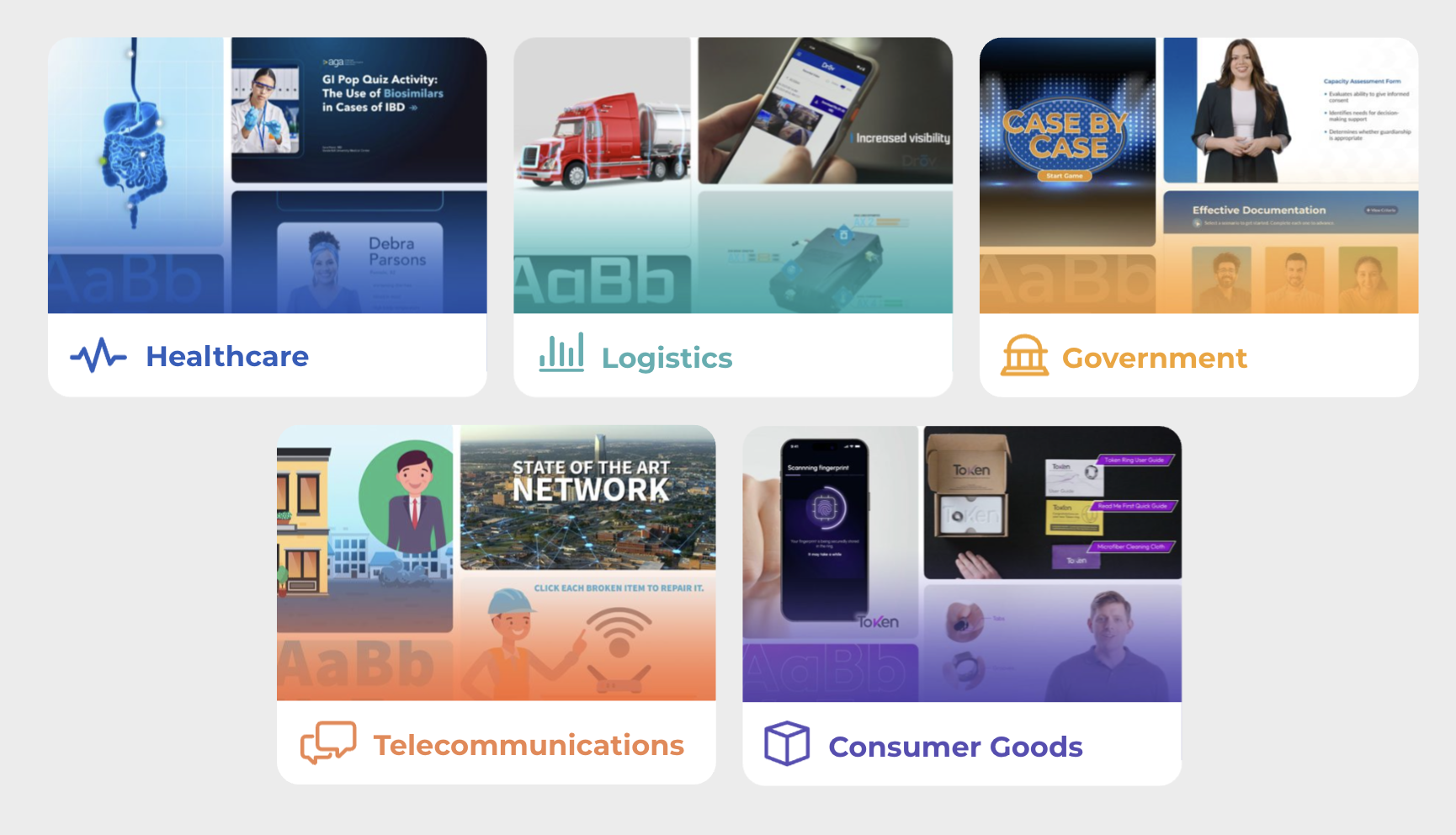
Scaling custom eLearning content across multiple regions and business units isn't a simple copy-paste exercise. Enterprise learning teams face unique challenges when moving from pilot programs to global rollouts—challenges that go far beyond just translating text into different languages.
NextThought partners with enterprise organizations to develop training content that works across borders and time zones. The following seven points will help your team evaluate vendors, prepare your infrastructure, and avoid common pitfalls when expanding your eLearning footprint.
Quick guide: 7 essentials for scaling custom eLearning globally
- LMS compatibility and packaging standards: The foundation for tracking learner progress across regions
- Localization beyond translation: Making content culturally relevant, not just linguistically accurate
- Governance and version control: Managing updates across dozens of regional content libraries
- Instructional design for global audiences: Creating modules that resonate regardless of location
- Video production quality and scalability: Maintaining cinematic standards at enterprise volume
- Vendor capacity and turnaround times: Ensuring your partner can keep pace with expansion
- Measurement and reporting infrastructure: Connecting learning data to business outcomes worldwide
How we identified these critical factors
These seven areas emerged from real conversations with Learning and Development leaders managing global workforces. They represent the questions that surface most frequently when organizations move past single-market pilots.
- LMS integration depth: Can your content play nicely with existing systems across all regions?
- Cultural adaptation requirements: Will learners in different markets connect with the material?
- Content governance needs: How will you maintain consistency while allowing regional flexibility?
- Production scalability: Can your vendor handle rapid expansion without quality drops?
- Data and analytics coverage: Will you be able to track and compare performance globally?
- Timeline and resource realities: What does your expansion actually require in terms of time and budget?

1. LMS compatibility and packaging standards: The technical foundation
Before adding a single new market, your eLearning content needs to speak the same language as your learning management systems. SCORM and xAPI are the two dominant standards that determine how courses communicate with your LMS.
SCORM remains the most widely supported format, making it a safe choice for organizations with legacy systems or multiple LMS platforms across regions. xAPI offers richer data collection and works for learning that happens outside traditional LMS environments.
NextThought delivers all custom training content with xAPI or SCORM packaging built in, giving your team flexibility in how content integrates with existing infrastructure. This eliminates the headache of reformatting modules when rolling out to new regional systems.
LMS compatibility features
- SCORM 1.2 and 2004 support: Backward compatibility ensures your content works with older LMS installations still running in some regions
- xAPI tracking capabilities: Capture granular learner data including time spent, quiz attempts, and interaction patterns beyond basic completion status
- Multi-LMS deployment: Single source files that work across different platforms without modification reduce your IT burden
LMS compatibility pros and cons
Pros:
- SCORM offers near-universal LMS support across enterprise systems
- xAPI enables tracking of informal and mobile learning activities
- Proper packaging reduces technical support tickets during rollouts
Cons:
- Legacy SCORM implementations may limit analytics depth
- xAPI requires compatible LRS (Learning Record Store) infrastructure
- Regional IT teams may need training on new tracking standards
2. Localization beyond translation: Cultural resonance matters
Running your eLearning scripts through translation software and calling it done won't cut it for global audiences. True localization means adapting visuals, examples, scenarios, and even humor to resonate with learners in different cultural contexts.
Consider a customer service training module built around a retail scenario. The expectations around eye contact, personal space, and communication style vary dramatically between markets. A module that works in Dallas may confuse or even offend learners in Tokyo.
NextThought supports multilingual delivery with translation and captioning options that go beyond word-for-word conversion. This includes adapting on-screen text, voiceover tone, and visual elements to match regional expectations.
Localization features
- Native speaker voiceover: Professional narration that sounds natural to regional ears, not robotic text-to-speech
- Visual adaptation: Adjusting imagery, icons, and color choices that carry different meanings across cultures
- Scenario customization: Modifying examples and case studies to reflect local business practices and regulations
Localization pros and cons
Pros:
- Culturally adapted content shows higher completion rates in regional rollouts
- Local relevance builds learner trust and engagement
- Reduces compliance risks in markets with specific regulatory requirements
Cons:
- Full localization takes more time than simple translation
- Maintaining multiple versions adds content management complexity
- Quality assurance requires native reviewers in each target market
3. Governance and version control: Managing content at scale
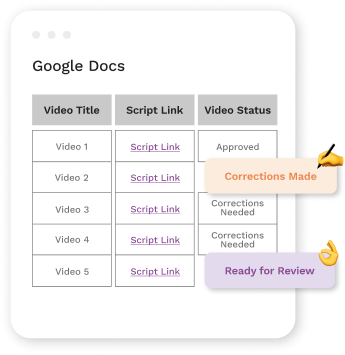
When you're maintaining eLearning libraries across ten, twenty, or fifty regional deployments, version control becomes critical. Without a clear governance structure, you'll end up with inconsistent messaging, outdated modules, and compliance gaps.
The most effective global programs establish a central source of truth—a master version from which all regional adaptations branch. Updates flow from the center outward, with clear processes for incorporating regional feedback without fragmenting the core content.
NextThought works with dedicated project teams who manage the entire content development workflow. This collaborative approach ensures your central L&D team maintains visibility and control while regional stakeholders contribute local expertise.
Governance features
- Version tracking systems: Know exactly which version is deployed in each region at any given time
- Update cascading processes: Systematic approaches to rolling out changes across all regional variants
- Approval workflows: Clear sign-off procedures that include both central and regional stakeholders
Governance pros and cons
Pros:
- Central governance reduces inconsistencies in compliance-critical content
- Clear version control simplifies auditing and reporting
- Defined workflows prevent unauthorized modifications
Cons:
- Rigid governance can slow response to regional needs
- Requires investment in content management infrastructure
- Balancing central control with local autonomy demands ongoing negotiation
4. Instructional design for global audiences: Universal learning principles
Great instructional design transcends borders. The fundamentals of how adults learn—active engagement, spaced repetition, immediate feedback—apply whether your learners are in Munich or Mumbai.
The challenge lies in applying these principles while leaving room for cultural adaptation. This means designing modular content structures that can accommodate regional variations without requiring complete rebuilds.
NextThought's learning design team uses frameworks that balance universal learning science with flexibility for regional customization. By building modularity into the initial design, future localization becomes a matter of swapping components rather than starting from scratch.
Instructional design features
- Modular architecture: Self-contained segments that can be rearranged or replaced for regional needs
- Scenario-based learning: Interactive decision points that engage learners regardless of cultural background
- Microlearning formats: Bite-sized content that fits varied schedules and learning contexts across regions
Instructional design pros and cons
Pros:
- Modular design reduces localization costs and timelines
- Universal principles drive consistent learning outcomes globally
- Scenario-based approaches work across cultural contexts with minor adaptations
Cons:
- Upfront modular planning requires more initial design time
- Some highly culture-specific topics resist modular treatment
- Regional teams may feel constrained by standardized structures
5. Video production quality and scalability: Cinematic standards at volume
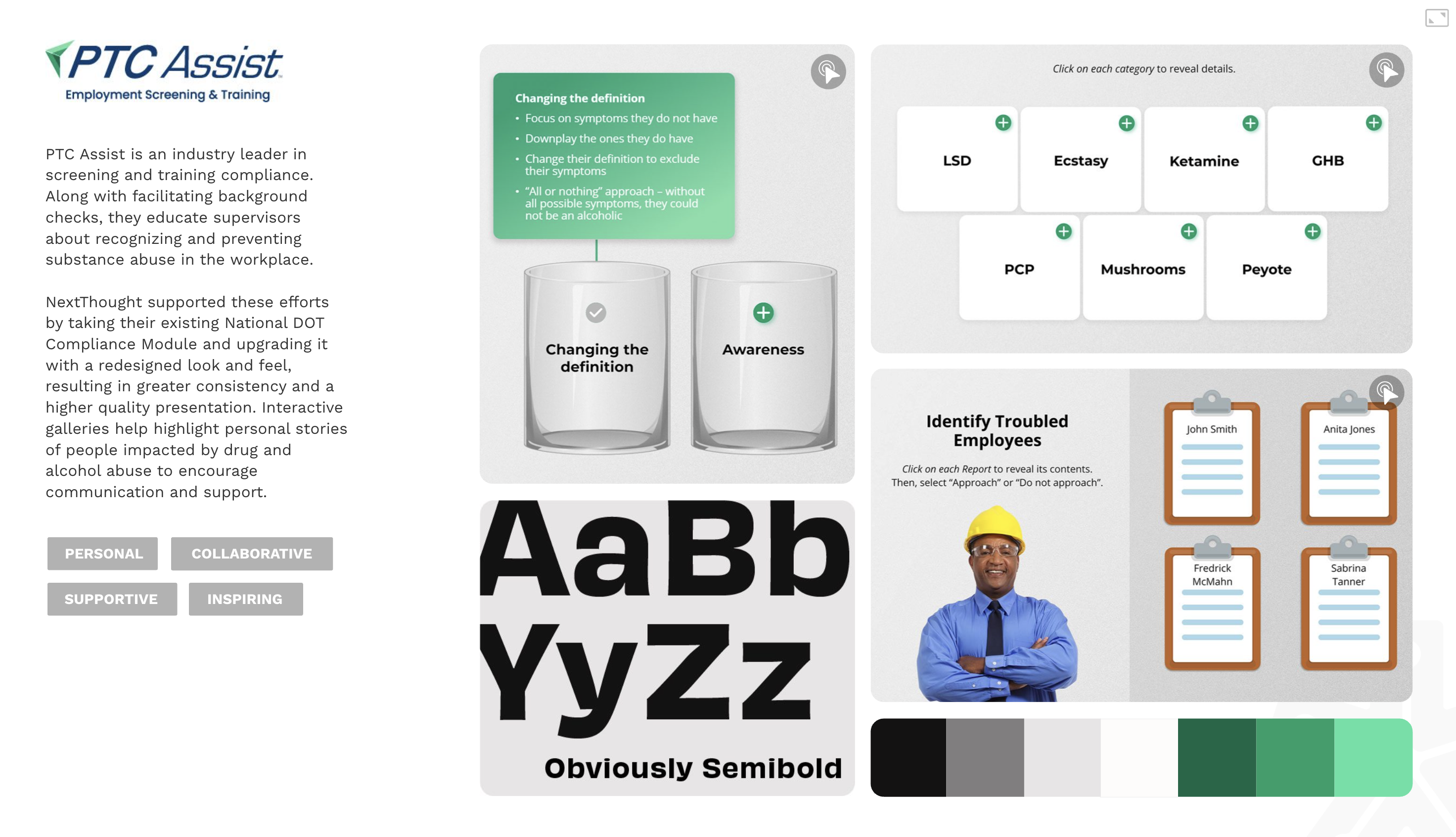
Video remains the most engaging format for corporate training, but maintaining production quality while scaling globally presents real challenges. The difference between professional and amateur video training is immediately apparent to learners—and directly impacts how seriously they take the content.
Enterprise scale demands production partners who can deliver consistently high-quality video without bottlenecks. This means established workflows, equipment redundancy, and teams who can work in parallel on multiple projects.
NextThought's award-winning production team has produced over 1,000 videos across industries, from animated explainers to live-action scenario training. This experience translates into efficient processes that maintain quality while meeting demanding enterprise timelines.
Video production features
- Multi-format capabilities: Live action, 2D animation, 3D rendering, and motion graphics from a single production partner
- Rapid turnaround: Proven workflows that deliver completed modules in 4-12 weeks depending on complexity
- Interactive elements: Embedded quizzes, branching scenarios, and engagement checkpoints within video content
Video production pros and cons
Pros:
- High-quality video drives stronger learner engagement and retention
- Professional production reflects positively on organizational training investment
- Multiple format options allow matching content type to learning objective
Cons:
- Video production timelines can extend overall project schedules
- Updates require re-recording or re-animating affected segments
- File sizes may challenge bandwidth in some global locations
6. Vendor capacity and turnaround: Keeping pace with growth
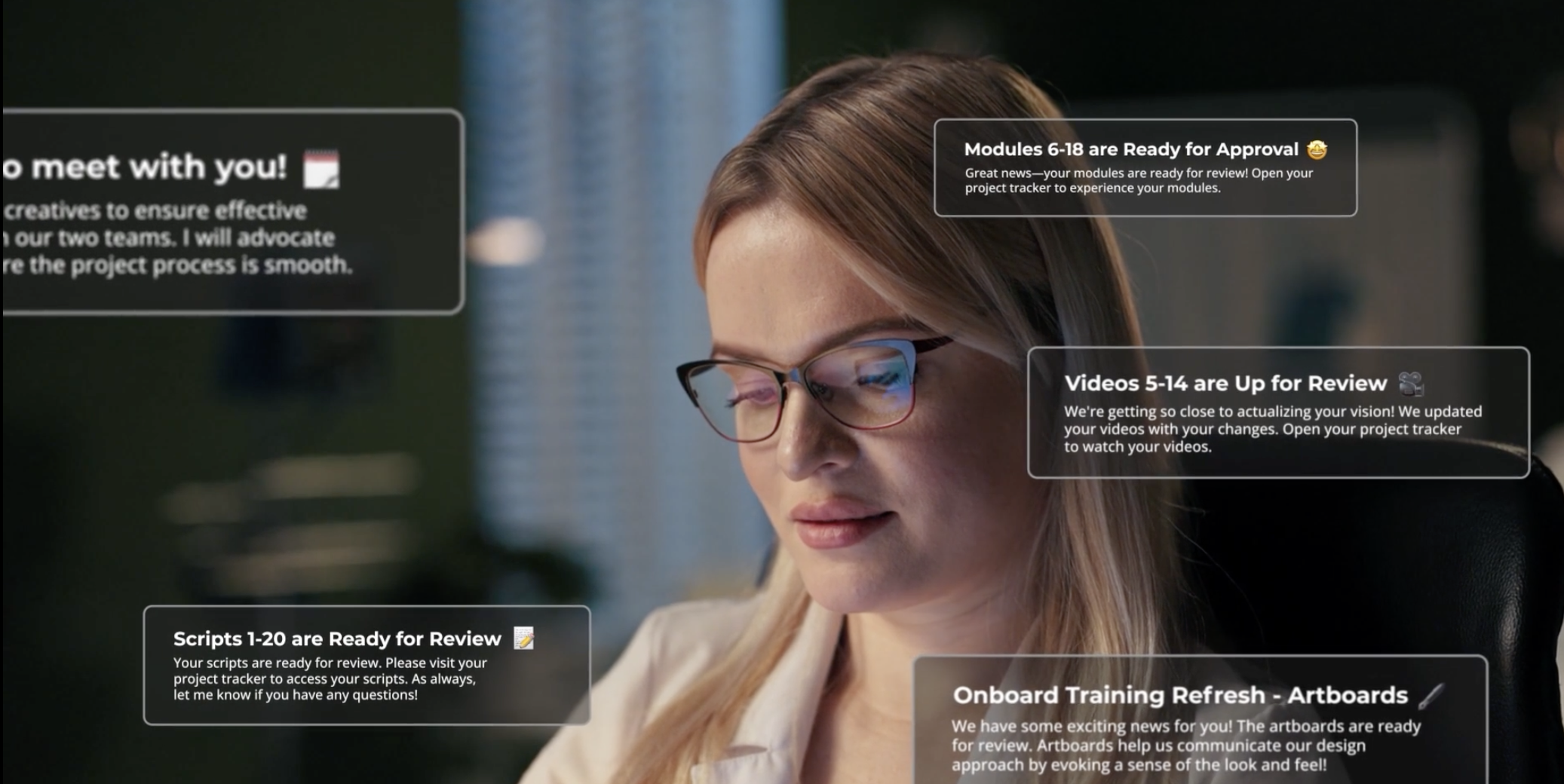
Your eLearning vendor's capacity directly impacts your ability to scale. A partner perfectly suited for a single-market rollout may buckle under the demands of simultaneous regional deployments.
Before committing to a global program, evaluate whether your vendor can realistically handle the volume. Ask about team size, project management resources, and how they handle peak demand periods. References from clients with similar scale requirements offer valuable insight.
NextThought operates as a full-service content development partner, with capacity to handle enterprise-scale programs across multiple simultaneous workstreams. Flexible production timelines mean your expansion doesn't have to wait in a queue behind other clients.
Vendor capacity features
- Dedicated project teams: Named resources assigned to your program rather than rotating freelancers
- Parallel production: Ability to work on multiple regional variants simultaneously
- Scalable resources: Proven ability to expand team capacity to meet surge requirements
Vendor capacity pros and cons
Pros:
- Dedicated teams develop deep understanding of your brand and content needs
- Parallel production compresses overall program timelines
- Scalable capacity prevents bottlenecks during rapid expansion phases
Cons:
- High-capacity vendors may focus on enterprise clients, with implications for smaller projects
- Dedicated teams require longer-term engagement commitments
- Scaling rapidly still requires lead time for resource allocation
7. Measurement and reporting: Connecting learning to business outcomes
Expanding eLearning globally without expanding your measurement capabilities creates blind spots. You need visibility into completion rates, assessment scores, and engagement metrics across all regions to demonstrate ROI and identify improvement opportunities.
This requires thinking about analytics infrastructure from the start—not as an afterthought once content is deployed. Your LMS, content packaging standards, and regional system integrations all need to support the data flows that enable meaningful reporting.
NextThought delivers content packaged for LMS tracking and measurement using xAPI or SCORM standards. This ensures your analytics dashboards capture consistent data regardless of which regional system hosts the content.
Measurement features
- Standardized data capture: Consistent metrics across all regional deployments for apples-to-apples comparisons
- Completion and engagement tracking: Visibility into who's completing content and how they're interacting with it
- Assessment analytics: Quiz and scenario performance data that identifies knowledge gaps by region or role
Measurement pros and cons
Pros:
- Global analytics enable identification of regional performance patterns
- Consistent measurement supports accurate ROI calculations
- Data-driven insights inform content improvement priorities
Cons:
- Analytics infrastructure requires upfront investment
- Data privacy regulations vary by region, complicating some tracking approaches
- Meaningful analysis requires dedicated reporting resources
Comparison table: Key factors for scaling custom eLearning
| Factor | NextThought | Standard Vendors | DIY Approach |
|---|---|---|---|
| SCORM/xAPI packaging | ✓ Included | ✓ Often included | ✗ Requires expertise |
| Multilingual delivery | ✓ Full support | Varies | ✗ Limited capability |
| Video production quality | ✓ Cinematic | Varies | ✗ Often amateur |
| Dedicated project teams | ✓ Named resources | Varies | ✗ Internal only |
What governance structure works for global eLearning programs?
The most successful global eLearning programs operate with what's called a "hub and spoke" governance model. A central team owns the master content, quality standards, and core messaging. Regional teams manage localization, deployment timing, and local stakeholder relationships.
This balance prevents the two extremes that derail global programs: either rigid central control that ignores regional needs, or fragmented regional autonomy that creates inconsistent learner experiences.
Establishing clear decision rights early—who approves content changes, who owns regional adaptations, who manages vendor relationships—prevents conflicts as programs scale.
How do you maintain video quality when scaling production?
Maintaining video quality at scale comes down to three things: established processes, experienced teams, and appropriate technology investment. Vendors who've produced hundreds of training videos have developed workflows that catch quality issues before they reach final delivery.
Look for production partners who can show you their quality control checkpoints. How many review rounds are built into the process? Who approves final cuts? What happens when feedback requires significant revisions?
NextThought's Emmy-nominated production team brings decades of combined experience to every project. This expertise translates into consistent quality whether you're producing five modules or fifty.
Why NextThought is the trusted partner for enterprise custom eLearning
Scaling custom eLearning globally requires more than a vendor—it requires a partner who understands the complexity of enterprise learning programs. NextThought brings together creative production capabilities, technical expertise in LMS integration, and deep experience serving organizations across industries.
From healthcare to financial services to retail, NextThought has helped enterprise teams create training content that works across borders. The combination of strategic learning design and creative firepower means your content will engage learners while delivering measurable business results.
Ready to explore how NextThought can support your global eLearning expansion? Get a quote and see what's possible for your organization.
FAQs about scaling custom eLearning content globally
What LMS formats should enterprise eLearning content support?
Enterprise eLearning content should support both SCORM (1.2 and 2004 editions) and xAPI at minimum. SCORM remains the most widely compatible standard, while xAPI offers richer tracking for modern learning analytics. NextThought delivers all custom content with your choice of packaging standards built in.
How long does it take to localize eLearning content for a new region?
Full localization typically takes 4-8 weeks per language, depending on content complexity and localization depth. Simple translation runs faster, while cultural adaptation with new scenarios and imagery requires more time. Building modular content from the start reduces future localization timelines.
What's the difference between translation and localization?
Translation converts text from one language to another. Localization adapts the entire learning experience—including visuals, examples, scenarios, humor, and cultural references—to resonate with learners in a specific market. Effective global programs require localization, not just translation.
How do you maintain content consistency across multiple regions?
Consistency comes from clear governance. Establish a master version as your source of truth, define approval workflows for regional adaptations, and use version control systems to track what's deployed where. NextThought works with clients to establish these processes during initial program design.
What should I look for when evaluating eLearning vendors for global programs?
Evaluate production capacity, localization capabilities, LMS integration expertise, and experience with enterprise-scale programs. Ask for references from clients with similar scope requirements. NextThought has delivered training content for organizations across healthcare, technology, retail, and financial services at enterprise scale.
Content Agent
NextThought team
NextThought transforms workplace learning through creative technology and engaging media. We're fortunate to partner with some of the top organizations in the world to make their educational training content remarkable and effective.
Recent Posts
7 Things to Know Before Scaling Custom eLearning
August 12, 2026 8 Min Read
7 Video Strategies for Blended Learning in 2026
July 8, 2026 8 Min Read

eLearning Video Production for Global Teams in 2026
June 22, 2026 12 Min Read